
Murray ELDER
CAREER :
Murray Elder (University of Technology Sydney) is a pure mathematician working at the interface of algebra and theoretical computer science. He is co-managing editor of the journal of Groups, Complexity, Cryptology jointly with Vladimir Shpilrain (City University of New York), and incoming President of the Australian Mathematical Society (until 2028).
COMMITMENT TO OPEN SCIENCE :
Murray has always been interested in making research publishing fair and equitable, and is happy to promote awareness of the overlay publishing model that Episciences supports.
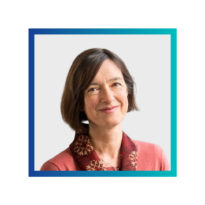
Anca MUSCHOLL
Professor, Univ. Bordeaux
CAREER:
I earned my PhD and habilitation at the University of Stuttgart (1995, 1999) and joined LIAFA, Université Paris 7, as a professor in 1999. I have been a professor at the University of Bordeaux and a member of LaBRI since 2007. In 2025–2015, I spent a sabbatical year at the Technical University of Munich as a Hans-Fischer Senior Fellow at the TUM Institute for Advanced Study.
COMMITMENT TO OPEN SCIENCE:
I have served as co-editor-in-chief of the open-access journal TheoretiCS since 2024 and have been a member of the editorial board of the open-access journal Logical Methods in Computer Science since 2022. I was also part of the editorial board of LiPIcs from 2017 to 2025. I have enthusiastically supported the principles of open science since its inception.

Filippo NUCCIO
Maitre de conférences HDR, Univ. Jean Monnet Saint Etienne
CAREER :
Filippo A. E. Nuccio is a Senior Lecturer at the Institut Camille Jordan of Jean Monnet University in Saint-Étienne. He has worked in number theory and arithmetic geometry, particularly in Iwasawa theory of number fields, elliptic curves, and modular forms. Currently, he is interested in mathematical formalisation, mostly in the Lean proof assistant and for the library Mathlib. Alongside his scientific interests, he is an advocate for open science, both in Mathematics and beyond. As such, he serves in the Publications panel of the Committee for open science at the French Ministry of Higher Education, Research and Space, and he is the open science coordinator of his university. Moreover, he is member of the steering committee of MathOA, an Dutch non-profit organisation aiming at fostering Diamond Open Access in Mathematics. In his double role of member of the scientific community working in formalised mathematics and of advocate for open science, in 2024 he has co-founded the overlay journal Annals of Formalized Mathematics, currently produced by EPISciences, and has served as managing editor of this journal since its creation.
COMMITMENT TO OPEN SCIENCE :
Due to my experience both as mathematician and as open science advocate, I've repeatedly found myself discussing with colleagues about diamond open access opportunities, both for authors and for editorial boards. I've witnessed that existing opportunities are often either neglected, or misjudged or simply ignored, and I believe that a more structured initiative, like EPISciences' "Ambassador Program" might help mitigating this unfortunate state of affairs and reinforce France's role as leader of open science.

Vladislav YASTREBOV
CAREER :
Dr. Vladislav A. Yastrebov obtained his PhD in 2011 from Mines Paris in computational contact mechanics. Since 2013 he is a CNRS Research Scientist
at the Centre des Matériaux, Mines Paris - PSL, in Versailles/Paris, France. His research focuses on micromechanical contact phenomena and related multi-physical couplings, including energy transfer in thermal and electrical contact, material degradation, elastodynamics, friction, and wear. His work finds applications in sealing problems, tyre-road contact, glacier sliding, and iceberg-glacier interactions. Since 2017, Vladislav has been involved in the creation of the Diamond Open Access journal JTCAM (Journal of Theoretical, Computational and Applied
Mechanics), launched in 2020 and hosted by Episciences.org, where he serves as Technical Editor and Board Member. This community-driven initiative promotes Open and Reproducible Science and maintains the highest ethical standards in scientific publishing.
COMMITMENT TO OPEN SCIENCE :
I am convinced that the existing publicly funded infrastructures, including Episciences, HAL, arXiv, Zenodo, Software Heritage and others, allow us (academics and researchers) to take more control over scientific publications and to make them open, free, fair and community-driven. The objective is to make us less dependent on commercial publishers whose objectives are not always aligned with those of good science.
The commercial publishing industry is built on business-oriented incentives pushing us to publish more and to pay a lot to share our research results with the community.
I am sure that as a community we can publish in a way that promotes deep and thoughtful science, avoiding this race to the bottom imposed by ever-increasing publication pressure.
I accepted the role of Episciences ambassador to motivate colleagues to preserve existing and create new community-led Diamond Open Access journals in different research fields. I believe that Episciences.org is a reliable overlay-based platform that meets all requirements to host a new generation of ethical journals promoting open science without paywalls.